

Choosing your first programming language can feel like staring at a pile of puzzle pieces with no picture on the box.
You’re here because you’re ready to dive into coding—but the sheer number of options like Python, JavaScript, and C++ is overwhelming. Which path sets you up for success? Which one matches your goals, not just trends?
That’s exactly what this guide is here to solve.
We break down the decision-making process based on what you want to build—whether it’s websites, games, apps, or automations. No fluff, no jargon—just a practical tool to help you choose the right first language and start writing code today.
This isn’t about memorizing syntax. It’s about making a smart, confident choice that gets you moving forward.
What is a Programming Language? A Simple Guide for Humans
As you embark on your coding journey with the top programming languages to learn as a beginner, don’t forget to also keep your laptop’s performance in check, especially if you find yourself troubleshooting battery drain issues effectively during those long study sessions – for more details, check out our Troubleshooting Laptop Battery Drain Issues Effectively.
As you embark on your coding journey, exploring the top programming languages to learn as a beginner can set a strong foundation, just as staying updated with the latest innovations in tech, like those featured in ‘Fntkdevices Hi Tech Devices By Fitness-talk‘, can enhance your overall digital literacy.
Let’s clear something up.
When people hear programming language, they often imagine complex math, endless typing, or even scenes from The Matrix (cue green code raining down the screen). But the truth is far less intimidating—and surprisingly logical.
A programming language is just a structured way to give instructions to a computer. Think of it like a cooking recipe: you tell the machine what to do, step by step. The trick? Computers only understand binary—those tiny 1s and 0s. So we use languages like beginner programming languages to translate our instructions into something the machine can actually follow.
Here’s a quick breakdown:
| Term | What It Really Means |
|---|---|
| Code | Instructions you write for the computer |
| Syntax | The rules for how you write that code |
| Compiler / Interpreter | Translates your code to machine language |
| Output | The result of your code (a game, app, website) |
That’s it. You’re not speaking robot. You’re just writing recipes the computer can cook. (And yes, sometimes it burns things if your syntax is off.)
Pro tip: Start simple. Languages like Python were made to be human-friendly.
Before You Pick a Language, Pick a Goal
Let me be blunt: asking “What’s the best programming language?” is like asking “What’s the best tool?” without saying what you’re trying to build. A chainsaw isn’t great for hanging a picture frame.
Personally, I think this question actually slows people down. It fuels endless Reddit rabbit holes and YouTube binge sessions. (We’ve all seen that one 40-minute video titled “Python vs. JavaScript in 2026”—and no, it doesn’t help.)
Here’s my take: the only “best” language is the one that gets you closer to your goal.
Want to create interactive websites? Then there’s no debate—JavaScript is your road.
Dreaming of automating boring tasks or analyzing cool data sets? Say hello to Python.
Always wanted to develop games in Unity? beginner programming languages like C# will be your jam.
Pro tip: Pick a project first, even if it’s tiny. A clear goal keeps you motivated when syntax errors try to break your spirit.
Bottom line: choose the destination before you pick the ride.
The Top 3 Languages for Beginners, Demystified
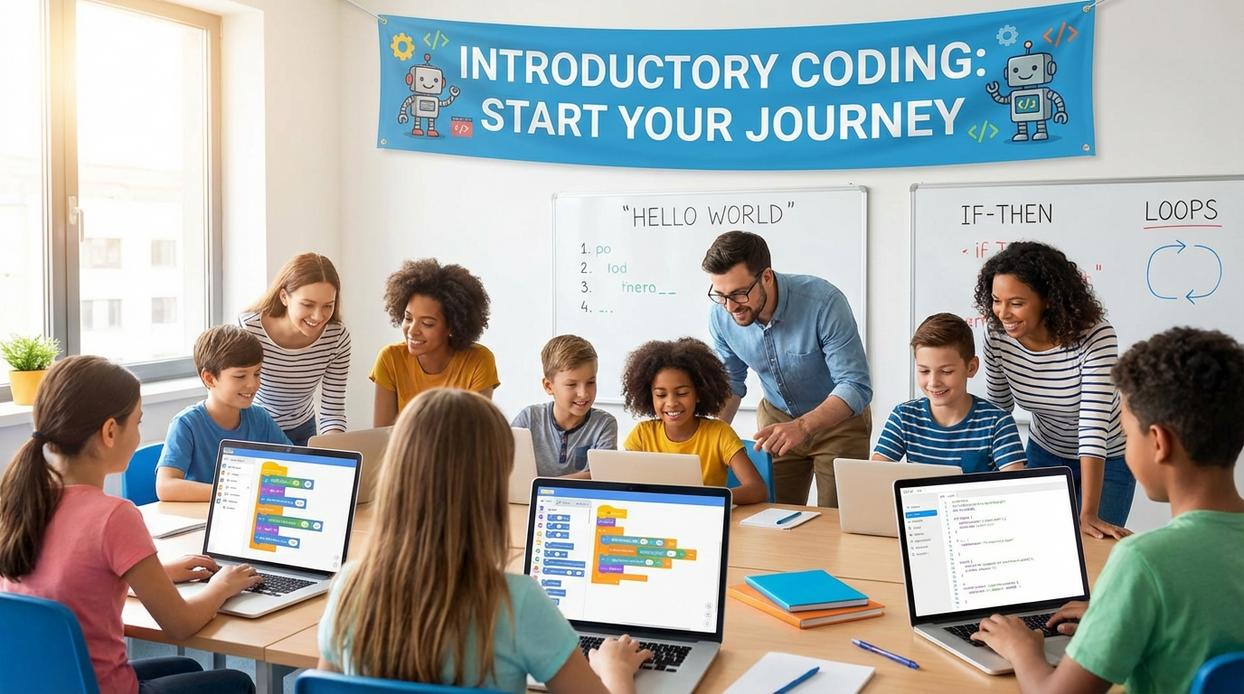
So, you’ve finally decided to learn programming—but now you’re staring at a dozen language options, all claiming to be the best. (Cue decision anxiety.)
Let’s make it easy.
We’ll compare three of the best beginner programming languages side by side so you can figure out which one’s right for you, based on what you want to do—not what the internet yells at you.
1. Python vs JavaScript: Simplicity vs Interactivity
Python is often hyped as the most beginner-friendly language—and with good reason. Its clean, English-like syntax means you’ll spend less time fighting the code and more time understanding how computers think. Think of Python as the Swiss Army knife of coding: good for data analysis, AI, automation, and more.
JavaScript, on the other hand, is the king of the browser. If your dream is to build flashy websites or dynamic web apps (hello, interactive forms and real-time updates), JavaScript is your go-to. It’s more quirky than Python—expect a few curveballs if you’re switching between types.
Pro tip: Use Python to build the logic behind your app and JavaScript to bring it to life on the front end.
2. Java vs Python: Structure vs Speed
Java comes with more rules—think of it like the SUV of programming: powerful but slightly harder to maneuver at first. It’s popular in large organizations for Android apps and enterprise systems. Python, in contrast, is lighter, faster to write, and adored by startups and data scientists.
Yes, Java can be verbose (get ready to write more code than you might like), but some argue it builds better long-term coding discipline. Fair enough, but if you’re looking for fast, beginner-friendly wins, Python takes the lead.
3. Scratch vs Everything Else
Okay, this might surprise you—but if you’re really new or under 13, Scratch is a visual language that lets you snap code blocks together like digital LEGO. It simplifies complex logic and builds foundational thinking.
Will you build the next AI assistant with Scratch? Probably not. But you’ll understand loops, conditions, and event triggers—core concepts that make learning Python or JavaScript way easier later on.
Still curious about how all this ties into the web? Check out how the internet works a simplified technical overview to see where these languages actually run.
Bottom line: all three have their place. Your best pick depends on whether you dream of apps, automation, or just learning the ropes with zero stress.
Your First Steps: How to Start Learning Today
Let’s cut through the noise—no one becomes a developer by watching YouTube tutorials alone (we’ve all been there). The only real way to learn is by doing. So here’s how you actually get started:
-
Commit to a Goal: Pick just one thing for now. Do you want to build a website, analyze data, or make a game? Don’t try to do everything at once—it’s like trying to learn five instruments before mastering “Happy Birthday.”
-
Choose Your Language: Let your goal guide you. JavaScript, Python, or C# are great entry points because they’re beginner-friendly and widely used across different fields.
-
Find an Interactive Tutorial: Use platforms like freeCodeCamp or Codecademy that let you write actual code while learning. Reading won’t get your fingers used to typing real code.
-
Start a Micro-Project: Build a basic calculator, todo list, or simple webpage—anything small that runs and works. Starting is more important than perfecting.
Pro tip: Set aside 30 minutes a day. Consistency beats cramming when learning code.
Your Programming Journey Starts Now
You came here looking for direction—and now you have it.
Choosing your first programming language can feel overwhelming. With so many options and opinions, it’s easy to get stuck in research and never start. But now you’re clear: it’s not about choosing the “best” language, it’s about choosing the right one for your goals.
Whether it’s Python for its elegant simplicity, JavaScript to build the web, or C# to create stunning games—what matters most is picking one and diving in.
You understand the landscape. Now it’s time to act.
You’ve explored your options. Now let’s turn that knowledge into momentum.
Here’s what you should do next:
Start coding today. Choose your path—Python, JavaScript, or C#—and write your first real project. Still unsure? Download our #1-rated beginner starter kit, packed with guided tutorials and real-world examples. Stop staring at the map. Take the first step—start building.
 Thomas Currynionez is the kind of writer who genuinely cannot publish something without checking it twice. Maybe three times. They came to ai and machine learning insights through years of hands-on work rather than theory, which means the things they writes about — AI and Machine Learning Insights, Tech Innovation Alerts, Expert Insights, among other areas — are things they has actually tested, questioned, and revised opinions on more than once.
That shows in the work. Thomas's pieces tend to go a level deeper than most. Not in a way that becomes unreadable, but in a way that makes you realize you'd been missing something important. They has a habit of finding the detail that everybody else glosses over and making it the center of the story — which sounds simple, but takes a rare combination of curiosity and patience to pull off consistently. The writing never feels rushed. It feels like someone who sat with the subject long enough to actually understand it.
Outside of specific topics, what Thomas cares about most is whether the reader walks away with something useful. Not impressed. Not entertained. Useful. That's a harder bar to clear than it sounds, and they clears it more often than not — which is why readers tend to remember Thomas's articles long after they've forgotten the headline.
Thomas Currynionez is the kind of writer who genuinely cannot publish something without checking it twice. Maybe three times. They came to ai and machine learning insights through years of hands-on work rather than theory, which means the things they writes about — AI and Machine Learning Insights, Tech Innovation Alerts, Expert Insights, among other areas — are things they has actually tested, questioned, and revised opinions on more than once.
That shows in the work. Thomas's pieces tend to go a level deeper than most. Not in a way that becomes unreadable, but in a way that makes you realize you'd been missing something important. They has a habit of finding the detail that everybody else glosses over and making it the center of the story — which sounds simple, but takes a rare combination of curiosity and patience to pull off consistently. The writing never feels rushed. It feels like someone who sat with the subject long enough to actually understand it.
Outside of specific topics, what Thomas cares about most is whether the reader walks away with something useful. Not impressed. Not entertained. Useful. That's a harder bar to clear than it sounds, and they clears it more often than not — which is why readers tend to remember Thomas's articles long after they've forgotten the headline.