
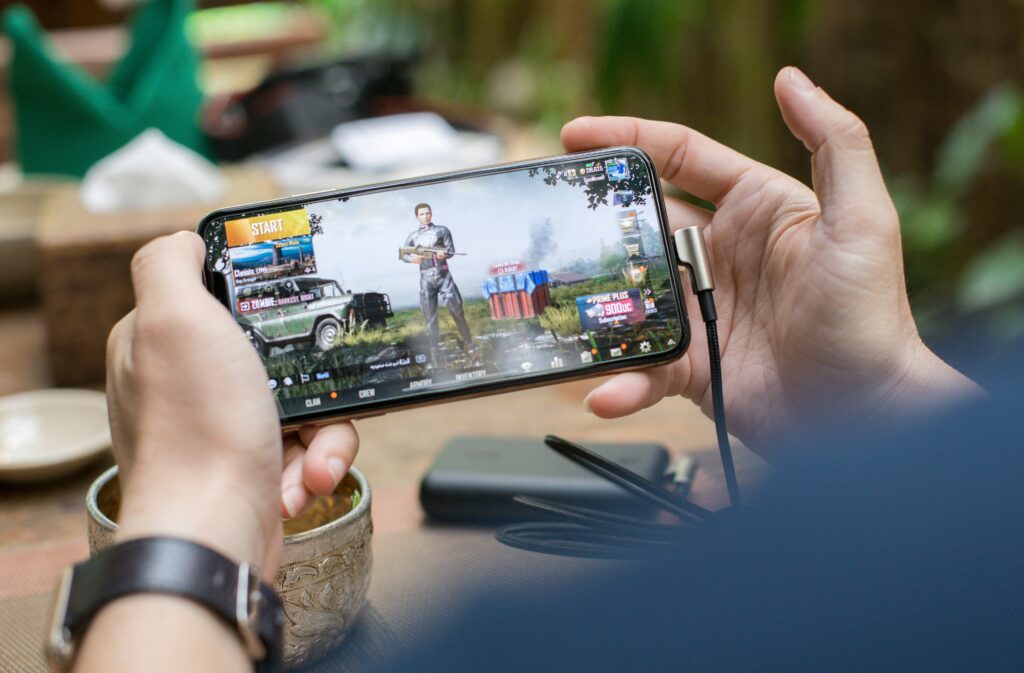
Mobile gaming is no longer the “casual” side of the games industry. By 2026, it is expected to dominate entertainment spending, influence hardware innovation, and reshape how consumers interact with digital media. Analysts estimate the global mobile gaming market will exceed $137 billion in 2026 and could approach $289 billion by 2034 as smartphone adoption, cloud infrastructure, and AI-powered experiences continue to evolve.
The next wave of growth will not simply come from more downloads. Instead, it will be driven by deeper engagement, cross-platform ecosystems, and increasingly immersive experiences that blur the line between mobile, console, and PC gaming.
Cloud Gaming Goes Mainstream
One of the biggest shifts arriving in 2026 is the acceleration of cloud gaming on smartphones. Consumers are becoming less dependent on expensive hardware because games can now be streamed directly to mobile devices with minimal installation requirements.
Industry forecasts suggest the cloud gaming market could surpass $21 billion by 2030, supported by 5G rollout and faster wireless infrastructure.
For players, this means AAA-quality titles on mid-range phones. Rather than buying a dedicated gaming console, users will increasingly subscribe to services that provide instant access to large gaming libraries across multiple devices.
This “platform collision” is already reshaping player expectations. Consumers want to begin a session on mobile during a commute and continue on a TV or PC later without losing progress. Reports from 2026 indicate that the divide between console and mobile gaming is shrinking rapidly as ecosystems become hardware-agnostic.
However, latency remains a challenge. While many players welcome the convenience of streaming, online discussions still show skepticism about whether cloud gaming can fully replace local hardware for competitive titles.
AI-Powered Personalization Will Transform Gameplay
Artificial intelligence is becoming central to mobile game development. In 2026 and beyond, AI will not just help developers create games faster — it will actively shape player experiences in real time.
Morgan Stanley estimates AI-driven efficiencies could unlock as much as $22 billion in additional annual profit across the gaming industry by reducing development costs and accelerating production timelines.
For consumers, the impact will be visible through smarter NPCs, adaptive difficulty systems, personalized storylines, and more responsive matchmaking. AI will also improve retention by analyzing player behavior and adjusting gameplay loops dynamically.
This trend is especially important in free-to-play gaming, where engagement directly influences monetization. Instead of static content updates every few months, games may evolve continuously based on live player data.
Developers are also expected to use AI-generated environments and procedural storytelling to deliver near-endless replayability without dramatically increasing production budgets.
Cross-Platform Play Will Become Standard
Cross-platform gaming has moved from novelty to expectation. Players increasingly demand synchronized progress, shared inventories, and multiplayer access across devices.
This shift is helping mobile gaming attract more “core gamers” who previously preferred consoles or PCs. Genres once considered difficult on mobile — including strategy games, RPGs, and competitive shooters — are seeing strong growth thanks to controller support, cloud streaming, and stronger mobile chipsets.
As a result, mobile gaming is becoming central to the broader gaming ecosystem rather than functioning as a separate market.
Consumers are also spending more time inside persistent gaming environments that combine entertainment, communication, and commerce. This evolution supports everything from live concerts and esports events to social casino experiences and roulette gaming on various platforms, all integrated into mobile-first ecosystems.
Mobile Esports Will Expand Globally
Esports on mobile devices continues to gain traction, particularly in Asia-Pacific, Latin America, and emerging markets where smartphones are more accessible than gaming PCs.
Research shows Asia-Pacific already accounts for over 47% of the global mobile gaming market.
Competitive mobile titles are attracting millions of viewers through streaming platforms and social media integration. Tournament prize pools are rising, while publishers increasingly design games specifically for spectator-friendly formats.
The accessibility of mobile esports is a major advantage. A consumer can participate in competitive gaming with only a smartphone and an internet connection, dramatically lowering the barrier to entry.
Over the next several years, expect brands, telecom providers, and advertisers to invest heavily in mobile esports sponsorships as audiences continue expanding worldwide.
Hybrid Monetization Will Dominate
The traditional reliance on in-app purchases alone is fading. In 2026, hybrid monetization models combining subscriptions, rewarded ads, battle passes, and premium content are becoming the industry standard.
Statistics show that free-to-play titles still generate the majority of mobile gaming revenue, with in-app purchases accounting for roughly 75% of earnings.
At the same time, developers are diversifying revenue streams to offset rising user acquisition costs and slowing download growth.
Community discussions within the industry suggest future success will depend less on raw installs and more on long-term engagement and retention.
Subscription-based gaming ecosystems similar to streaming video services are likely to become more common, particularly as cloud gaming libraries expand.
The Future of Mobile Gaming
The next era of mobile gaming will be defined by convergence. Smartphones are evolving into all-purpose gaming hubs capable of supporting competitive esports, cinematic storytelling, social interaction, and cloud-powered AAA experiences.
By 2027, analysts expect the number of mobile gamers worldwide to reach approximately 3.7 billion people.
That scale gives mobile gaming an unmatched cultural and commercial influence. Developers, advertisers, hardware manufacturers, and telecom companies are all positioning themselves around a future where gaming is accessible anywhere, instantly, and across every connected screen.
For consumers, the result will be richer experiences, fewer hardware limitations, and an entertainment ecosystem that feels increasingly seamless across platforms.
 Ask Cairis Tornhaven how they got into expert insights and you'll probably get a longer answer than you expected. The short version: Cairis started doing it, got genuinely hooked, and at some point realized they had accumulated enough hard-won knowledge that it would be a waste not to share it. So they started writing.
What makes Cairis worth reading is that they skips the obvious stuff. Nobody needs another surface-level take on Expert Insights, Throw Signal Encryption Techniques, Device Troubleshooting Guides. What readers actually want is the nuance — the part that only becomes clear after you've made a few mistakes and figured out why. That's the territory Cairis operates in. The writing is direct, occasionally blunt, and always built around what's actually true rather than what sounds good in an article. They has little patience for filler, which means they's pieces tend to be denser with real information than the average post on the same subject.
Cairis doesn't write to impress anyone. They writes because they has things to say that they genuinely thinks people should hear. That motivation — basic as it sounds — produces something noticeably different from content written for clicks or word count. Readers pick up on it. The comments on Cairis's work tend to reflect that.
Ask Cairis Tornhaven how they got into expert insights and you'll probably get a longer answer than you expected. The short version: Cairis started doing it, got genuinely hooked, and at some point realized they had accumulated enough hard-won knowledge that it would be a waste not to share it. So they started writing.
What makes Cairis worth reading is that they skips the obvious stuff. Nobody needs another surface-level take on Expert Insights, Throw Signal Encryption Techniques, Device Troubleshooting Guides. What readers actually want is the nuance — the part that only becomes clear after you've made a few mistakes and figured out why. That's the territory Cairis operates in. The writing is direct, occasionally blunt, and always built around what's actually true rather than what sounds good in an article. They has little patience for filler, which means they's pieces tend to be denser with real information than the average post on the same subject.
Cairis doesn't write to impress anyone. They writes because they has things to say that they genuinely thinks people should hear. That motivation — basic as it sounds — produces something noticeably different from content written for clicks or word count. Readers pick up on it. The comments on Cairis's work tend to reflect that.