
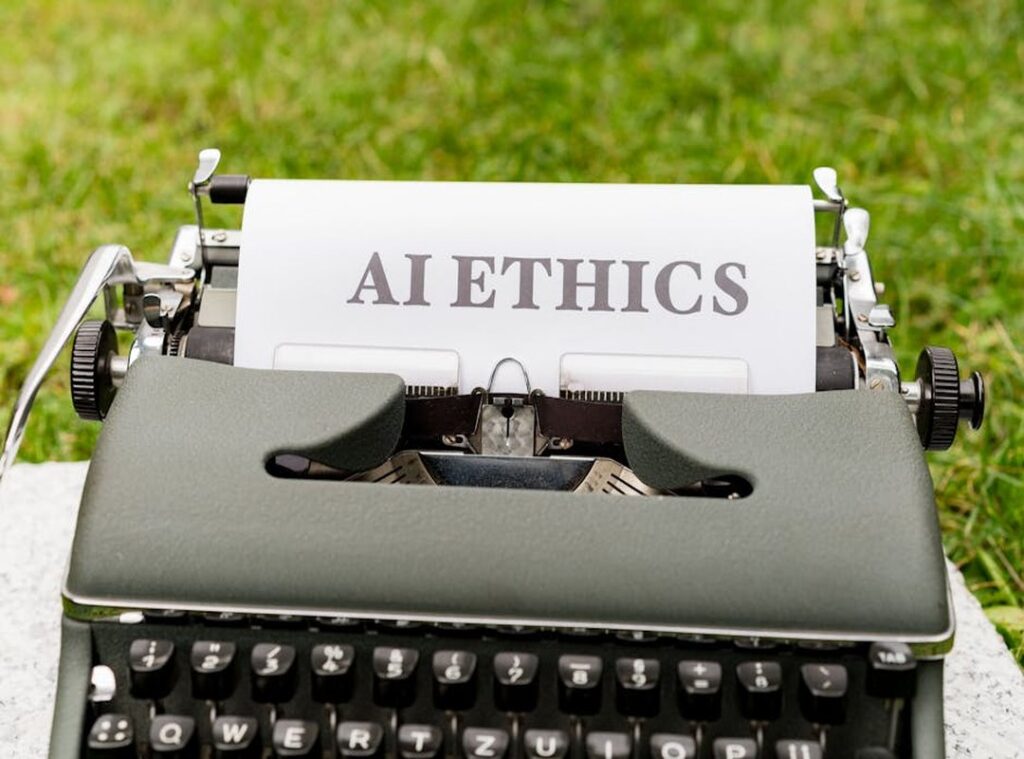
Imagine an AI deciding on a medical treatment or approving a loan. Does that make you uneasy? It should.
How did it decide that? Can we trust it? These are the ethical challenges ai presents.
As AI tightens its grip on our everyday lives, the absence of clear ethical boundaries poses risks to fairness, privacy, and safety. We need to tread carefully.
This article is your guide through the moral maze of AI. We’ll cut through the noise and demystify the core ethical considerations. No technobabble.
Just a practical system. We draw on a deep understanding of tech’s societal impact, focusing on building systems you can trust. Ready to get clarity on these issues?
You’ll finish with actionable takeaways to get through this complex space.
AI Ethics: Building a System That Lasts
AI ethics isn’t just a “do no harm” mantra. It’s a system built on principles that make sure technology serves us, not the other way around. Let’s break it down into four core pillars.
Each key and unique.
First up, Bias & Fairness. Ever heard of AI in hiring? It’s supposed to find the best candidate, but biases can creep in, making it unfair.
Imagine relying on a bridge with a crack in it. Scary, right? We need to mend those cracks by ensuring AI treats everyone equally.
Next, there’s Transparency & Explainability. When AI decides who gets a loan, you want to know why. It’s like wanting to see the recipe of a dish before tasting it.
If AI’s a black box, how can we trust it? This pillar demands that AI’s decisions be clear and understandable.
Accountability & Responsibility follow. Autonomous vehicles are cool until something goes wrong. Who’s to blame?
The car? The programmer? It’s like a game of hot potato, but with lives at stake.
We need to pinpoint responsibility so we can learn and improve.
Finally, Privacy & Security. Smart home devices can be intrusive. They know when you’re home or away.
Imagine a door with a lock everyone can pick. Privacy should never be compromised, but sometimes it clashes with AI’s need for data. These ethical challenges AI presents are real and pressing.
Each pillar is like a supporting beam of a bridge. Remove one, and the structure wobbles. The tension between them (like privacy versus accuracy) makes the debate complex.
Yet, understanding these pillars is key. If you’re curious about how these discussions shape the industry, Tech Industry Trends Top Analysts provide some great takeaways.
Bias and Fairness: AI’s Reflective Mirror
AI doesn’t create bias. It learns from the biases already hiding in our data. It’s like a kid picking up bad habits from watching adults.
This is algorithmic bias. AI systems reflect and amplify these prejudices, and that’s a problem.
Consider facial recognition technology. It’s notorious for failing on women and people of color. Why?
Because the data it’s trained on is often skewed. If the data mainly includes white male faces, guess what the AI learns? It’s not magic; it’s mimicry.
And let’s talk about the criminal justice system. Biased algorithms have led to unfair sentencing. People of color get harsher penalties.
It’s a harsh example of “garbage in, garbage out.” If historical data reflects inequality, AI treats it as gospel.
So, how do we fix this? First, we need diverse and representative datasets. You can’t expect fairness from biased inputs.
Regular algorithmic audits are also key. They help us catch biases before they wreak havoc. Implementing ‘human-in-the-loop’ systems can add a layer of judgment that machines lack.
But here’s the kicker: we can’t solve this alone. We need a community effort to address these ethical challenges ai presents. If you’re curious about AI ethics, check out what is ai ethics? for more on the topic.
Pro tip? Stay informed and question the systems around you. AI is solid, but it’s only as good as the data we feed it.
Let’s make sure it’s the right data.
The Privacy Paradox: AI’s Thirst for Data vs. Anonymity
The balance between AI’s hunger for data and our need for privacy is a tricky one. We live in a world where the most solid AI models demand mountains of data to perform well. Yet, this data is often deeply personal.
Think about those personalized ads that seem to read your mind. Ever wondered how they know what you want before you do? It’s the data (your) data.
Now, where’s the line between personalization and surveillance? That’s the ethical challenge AI faces today. When does help become intrusion?
For consumers and developers, this is a central question. We need AI that respects privacy but still delivers value. It’s a tough nut to crack.
Luckily, there are emerging solutions. Ever heard of Federated Learning? It trains AI models on your device, so your raw data doesn’t have to leave it.
Then there’s Differential Privacy. By adding statistical “noise,” it protects individual identities. These techniques show promise, but we’re still figuring out the balance.
And here’s the kicker: even the best AI minds are grappling with this. If you’re curious about how they’re tackling it, check out these lessons from leading tech CEOs. It’s a fascinating look at the strategies and takeaways shaping our digital future.
In the end, the tug-of-war between data and privacy will define our tech space. We just need to make sure it plays out in our favor.
The Black Box Problem: Who Takes the Blame When AI Goes Wrong?
The “black box” problem in AI is as puzzling as a student who aces a test but can’t explain a single answer. Imagine that. You get the right answer, but when asked how, you shrug.
For some AI systems, even their creators can’t trace a decision back to its roots. It’s like magic, but with a sinister twist.
Here’s the burning question: If a self-driving car crashes, who’s to blame? The owner, the manufacturer, or the poor software engineer who can’t catch a break? This is a massive legal and ethical gray area.
It’s not just about pointing fingers. It’s about responsibility. And let’s face it, in the area of ethical challenges AI presents, this is a biggie.
Enter Explainable AI (XAI). It’s the push to create systems that actually explain themselves. Imagine a world where AI isn’t a mystery, but a transparent partner.
XAI aims to demystify AI’s decisions in terms we can all understand. Because transparency isn’t just a buzzword. It’s the key to building trust.
And trust, my friend, is everything.
But how do we fix this? It’s not just about tech. We need innovation in the form of XAI (obviously), but also a complete overhaul of our legal frameworks.
Only then can we assign responsibility properly in this age of automation. Who knew AI would need a legal guardian?
It’s a complex dance of tech and law. But it’s important if we’re going to sleep at night knowing our algorithms won’t turn rogue. Because, let’s be real, nobody wants to be left holding the bag when AI fails.
Build AI We Can Trust
AI’s potential is massive, but have we thought enough about its pitfalls? We’ve seen that ethical challenges ai can’t be ignored. Ignoring bias, surveillance, and lack of accountability isn’t an option.
Now, you get it. You’re equipped with the knowledge to question and critique. Why does this matter?
Because trust is the only currency that counts in tech.
Proactively tackling these issues ensures AI benefits everyone. Sounds good, right? Here’s the deal: ask tough questions.
Demand transparency. Is the AI you’re using fair? We need tech that empowers, not exploits.
So take action. Dive into resources at mogothrow77.com and be the change. It’s your turn to champion fairness and innovation.
Let’s shape a future where AI works for us all.
 Thomas Currynionez is the kind of writer who genuinely cannot publish something without checking it twice. Maybe three times. They came to ai and machine learning insights through years of hands-on work rather than theory, which means the things they writes about — AI and Machine Learning Insights, Tech Innovation Alerts, Expert Insights, among other areas — are things they has actually tested, questioned, and revised opinions on more than once.
That shows in the work. Thomas's pieces tend to go a level deeper than most. Not in a way that becomes unreadable, but in a way that makes you realize you'd been missing something important. They has a habit of finding the detail that everybody else glosses over and making it the center of the story — which sounds simple, but takes a rare combination of curiosity and patience to pull off consistently. The writing never feels rushed. It feels like someone who sat with the subject long enough to actually understand it.
Outside of specific topics, what Thomas cares about most is whether the reader walks away with something useful. Not impressed. Not entertained. Useful. That's a harder bar to clear than it sounds, and they clears it more often than not — which is why readers tend to remember Thomas's articles long after they've forgotten the headline.
Thomas Currynionez is the kind of writer who genuinely cannot publish something without checking it twice. Maybe three times. They came to ai and machine learning insights through years of hands-on work rather than theory, which means the things they writes about — AI and Machine Learning Insights, Tech Innovation Alerts, Expert Insights, among other areas — are things they has actually tested, questioned, and revised opinions on more than once.
That shows in the work. Thomas's pieces tend to go a level deeper than most. Not in a way that becomes unreadable, but in a way that makes you realize you'd been missing something important. They has a habit of finding the detail that everybody else glosses over and making it the center of the story — which sounds simple, but takes a rare combination of curiosity and patience to pull off consistently. The writing never feels rushed. It feels like someone who sat with the subject long enough to actually understand it.
Outside of specific topics, what Thomas cares about most is whether the reader walks away with something useful. Not impressed. Not entertained. Useful. That's a harder bar to clear than it sounds, and they clears it more often than not — which is why readers tend to remember Thomas's articles long after they've forgotten the headline.