How does a video stream from a server halfway across the world to your screen in seconds? This ‘magic’ is all thanks to networking fundamentals tech. But let’s be honest, networking can seem intimidating.
All that jargon? Enough to make anyone’s head spin. You’re not alone in feeling that way.
Here’s the thing. Networking is important, yet often feels like a secret club where only a few understand the handshake. But it doesn’t have to be that way.
In this article, we’ll break down the basics into bite-sized pieces. No overwhelming tech talk. Just straightforward explanations.
Why trust this content? Our experience in explaining foundational tech concepts comes from years of diving deep into AI and secure communications. By the end of this read, you’ll grasp how devices connect and communicate, making the complex simple.
Computer Networking: The City’s Road System of Tech
Computer networking is like the glue holding our digital world together. In simple terms, it’s a collection of interconnected devices that can exchange data and share resources. Imagine it as a city’s road system.
Devices are the buildings, and the connections are the roads, allowing data to flow smoothly between them. It’s a beautiful mess of wires and signals.
Let’s break it down further. At the core, you have two primary types of networks. There’s the Local Area Network (LAN), which covers a small area like your home or office.
Then, there’s the Wide Area Network (WAN), which stretches across large geographical areas and is pretty much what the internet is. Without these, our online interactions would be like trying to get through New York City without a map.
Why should you care about this? Well, networking is the backbone of everything from cloud computing to the Internet of Things (IoT). It’s what makes remote work and the data-driven needs of AI and machine learning possible.
We’re living understanding networking fundamentals tech isn’t optional anymore. It’s important even if you’re not an IT pro.
And hey, if you’re diving into tech, knowing the importance cybersecurity basics is just as key as networking. The two go hand in hand. In our data-hungry world, a strong grasp of these concepts empowers anyone working in tech.
Isn’t it time you got familiar with the foundation of our digital universe?
The Networking Toolkit: Hardware and Software Essentials
Let’s talk networking fundamentals tech. It’s like building a house. You need bricks (hardware) and a blueprint (software) to make it stand.
Without the right tools, you’re just stacking blocks with no structure. Ever tried to connect devices without the proper gear? It’s chaos.
Hardware: The Physical Foundation
Routers are your network’s traffic cops. They decide the best paths data should take between networks. Think of them as the GPS of the internet highway.
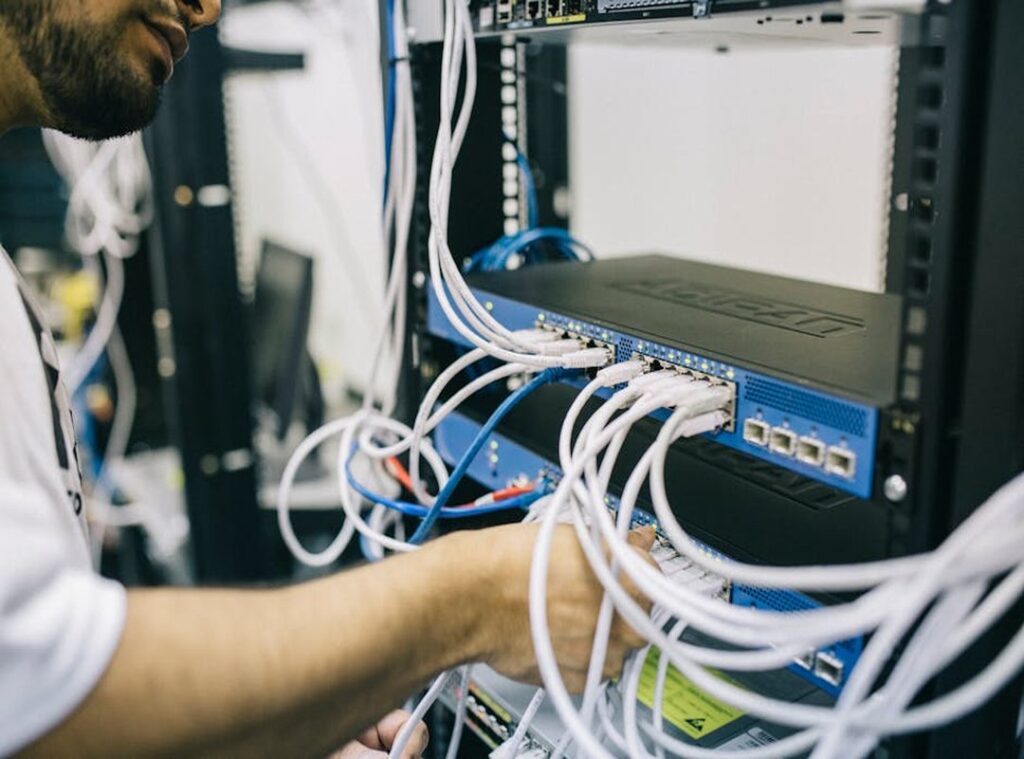
When data gets confusing, routers sort it out. Switches, on the other hand, play the role of local organizers. They manage traffic within a single local network (LAN), ensuring data reaches the right device.
Like a busy host at a party, they keep everything running smoothly.
Now, let’s not forget about Network Interface Cards (NICs). These are the passports for each device. They provide a unique address and a physical port to connect devices to the network.
Without NICs, your gadgets are just tourists with no entry visa.
Software: The Rules of Communication
Software is all about the rules. Protocols, in particular, are the rules governing how data is formatted, transmitted, and received. They’re like a shared language among devices.
Without them, your devices would be speaking gibberish to each other. For a deeper dive into this, check out understanding networking fundamentals.
So, why does this matter? Because understanding this toolkit is important for anyone wanting to make sense of network chaos. You can’t just slap things together and hope it works.
Get the basics right, and the rest will follow. That’s the real deal in tech.
How Data Travels: The Rulebook for Its Journey
Understanding how data travels can feel like trying to decode an ancient text. But stick with me (I) promise a simple, conceptual overview. Picture the OSI Model as a recipe.

Each step in the recipe represents a layer with a specific job. It’s a seven-layer blueprint that standardizes network functions. Why seven?
Because each layer has a distinct purpose, just like ingredients in a good cake. You follow the instructions, and voilà, everything works together seamlessly.
The OSI Model: A 7-Layer Blueprint
We won’t dive into every layer detail (because who has time for that?), but think of it as a structure that ensures different systems can communicate without chaos. Each layer in the OSI model serves a function, like a well-organized team with specific roles. This model is about creating order, ensuring data moves smoothly from sender to receiver.
The TCP/IP Model: The Internet’s Practical Rulebook
Now let’s talk TCP/IP. This is the internet’s go-to model. Imagine it as the postal service.
IP is like your addressing system (street, city, zip code) getting your data packet to the right spot. TCP adds the reliability factor, making sure everything arrives intact and in order. If something goes missing, it’s sent again (like registered mail ensuring delivery).
Pro Tip: Want to know how operating systems fit into this? Check out Operating Systems Core Functions. This link dives into how operating systems manage these processes.
In the world of networking fundamentals tech, these models are the unsung heroes making everything work. They’re the rulebooks that keep our digital communications flowing without a hitch. Next time you send an email or stream a video, thank the models behind the scenes.
They’re why your internet experience is smooth (not) chaotic.
Securing the Connection: Network Security Unveiled
Plug a device into any network and boom. Your data is out there, traveling through a digital maze. You think about security, don’t you?
We’re talking firewalls. Imagine them as digital security guards. They stand firm between your internal network and the vast, unruly internet, monitoring traffic like hawks and blocking harmful data based on a set of security rules.
Now, encryption. It’s a bit more secretive. Scrambling your data into a secret code sounds like sci-fi, right?
They’re important in networking fundamentals tech.
But it’s real. Only someone with the right key can decrypt the information. It’s like handing over a message in a locked box, ensuring that even if someone intercepts it, they can’t read it.
This is your invisible cloak against prying eyes.
And what about VPNs? They create a secure, encrypted tunnel over a public network. Think of it as a private passageway that keeps your browsing activity hidden from eavesdroppers.
You might be on a bustling coffee shop Wi-Fi, yet your data is safely tucked away.
So, why aren’t you using these tools yet? They’re key in keeping your network secure. Don’t risk it.
Get informed, stay secure, and protect what matters.
Master the Network
Ever wondered how the magic happens? The networking fundamentals tech we explored has demystified that world. You now know routers, switches, and protocols aren’t just jargon (they’re) the backbone of our connected lives.
What seemed like wizardry? Now, it’s just tech doing its job.
This understanding isn’t just for the curious. It’s key for anyone who wants to dive deeper into tech. You’ve got the base, so why stop here?
Dive into advanced topics. Explore how these principles fuel innovation.
Ready to take the next step? Visit mogothrow77.com. Discover content that keeps you ahead.
Get alerts on tech innovation. Grasp AI and machine learning takeaways. Don’t wait for the future (be) part of it.
Your journey continues. Keep learning.
 Thomas Currynionez is the kind of writer who genuinely cannot publish something without checking it twice. Maybe three times. They came to ai and machine learning insights through years of hands-on work rather than theory, which means the things they writes about — AI and Machine Learning Insights, Tech Innovation Alerts, Expert Insights, among other areas — are things they has actually tested, questioned, and revised opinions on more than once.
That shows in the work. Thomas's pieces tend to go a level deeper than most. Not in a way that becomes unreadable, but in a way that makes you realize you'd been missing something important. They has a habit of finding the detail that everybody else glosses over and making it the center of the story — which sounds simple, but takes a rare combination of curiosity and patience to pull off consistently. The writing never feels rushed. It feels like someone who sat with the subject long enough to actually understand it.
Outside of specific topics, what Thomas cares about most is whether the reader walks away with something useful. Not impressed. Not entertained. Useful. That's a harder bar to clear than it sounds, and they clears it more often than not — which is why readers tend to remember Thomas's articles long after they've forgotten the headline.
Thomas Currynionez is the kind of writer who genuinely cannot publish something without checking it twice. Maybe three times. They came to ai and machine learning insights through years of hands-on work rather than theory, which means the things they writes about — AI and Machine Learning Insights, Tech Innovation Alerts, Expert Insights, among other areas — are things they has actually tested, questioned, and revised opinions on more than once.
That shows in the work. Thomas's pieces tend to go a level deeper than most. Not in a way that becomes unreadable, but in a way that makes you realize you'd been missing something important. They has a habit of finding the detail that everybody else glosses over and making it the center of the story — which sounds simple, but takes a rare combination of curiosity and patience to pull off consistently. The writing never feels rushed. It feels like someone who sat with the subject long enough to actually understand it.
Outside of specific topics, what Thomas cares about most is whether the reader walks away with something useful. Not impressed. Not entertained. Useful. That's a harder bar to clear than it sounds, and they clears it more often than not — which is why readers tend to remember Thomas's articles long after they've forgotten the headline.